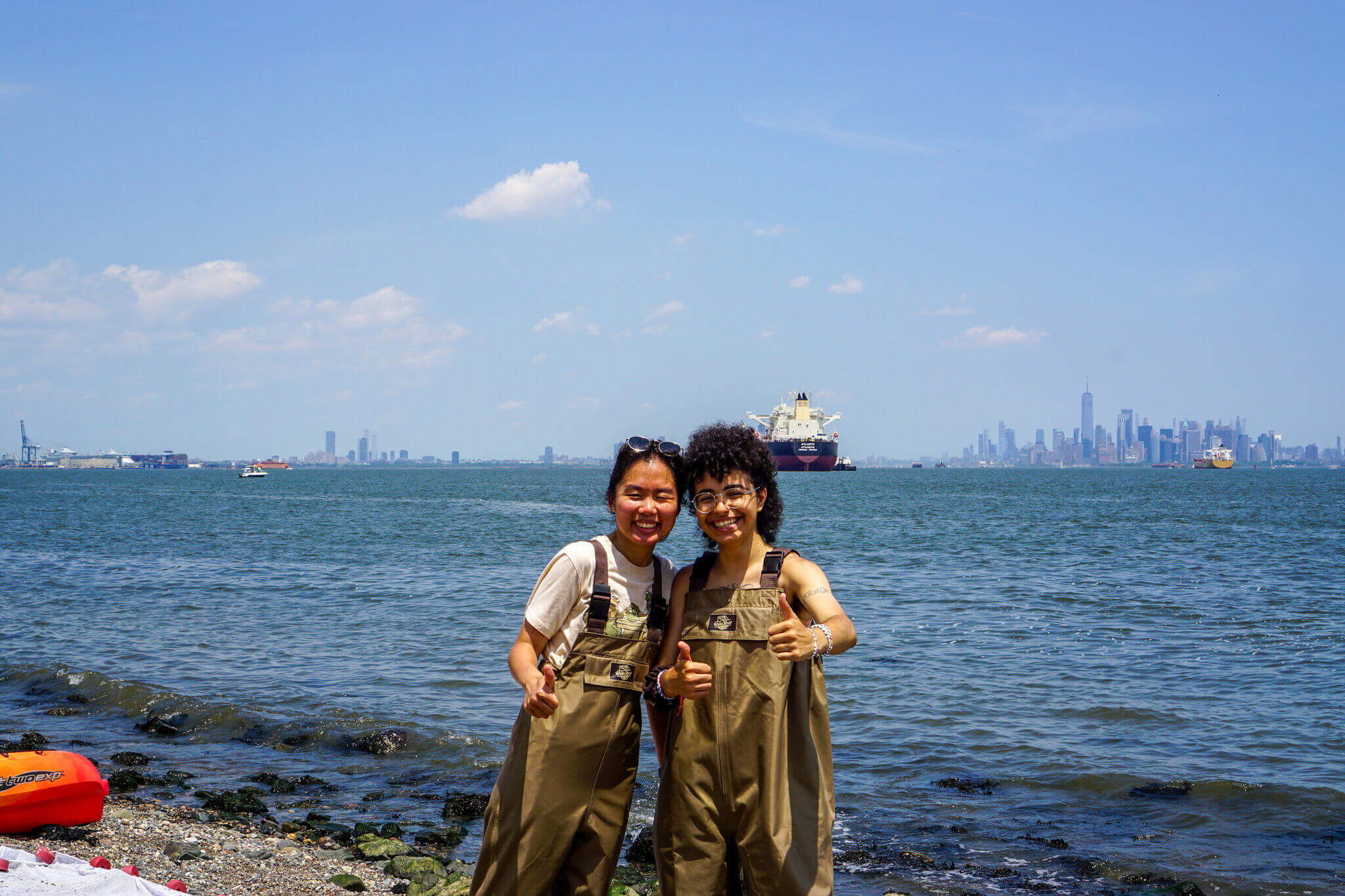
Imagine being a high school student with the power to help your neighborhood survive a massive flood or a record-breaking heatwave. This past season, twelve brave 10th-grade students from The New York Harbor School did exactly that. Through a six-week Workplace Challenge, these students stepped out of the classroom and into the world of professional climate resilience. They focused their energy on three major threats facing our city: flooding, extreme heat, and extreme cold.
For many young people, talking about the environment can feel overwhelming. This feeling is often called “climate anxiety,” and it comes from seeing the very real risks of power outages, health issues, and flood damage. Waterfront Alliance’s climate education program helps to mitigate that by building a sense of agency: the understanding that there is something they can do, and that their actions matter.
That belief—that knowledge leads to confidence, and confidence leads to action—is the foundation of our approach to climate education.
This approach comes to life through our Climate Informed Communities (CIC) initiative. CIC was created in recognition that underserved neighborhoods often bear the greatest burdens of climate change while having the fewest resources to prepare for it. Communities facing rising sea levels and extreme heat need more than awareness—they need tools, leadership, and access.
Through hands-on education programs, like Estuary Explorers, we introduce students to New York City’s harbor as both a learning environment and a source of civic responsibility. With 520 miles of coastline, the city is a living classroom – and we believe every student deserves the opportunity to explore it, understand it, and protect it. These programs help students see themselves not as passive observers of climate change, but as future stewards of their waterfront communities.
The NYC Public Schools Workplace Challenge builds directly on this foundation. Designed as a bridge between academic learning and future “green and blue” careers, the program places students with professional organizations to work on real‑world challenges. For Harbor School students, many already interested in maritime careers, the Challenge offered a direct pathway to explore how climate resilience work can translate into professional practice.
By treating students as junior experts rather than passive learners, the program strengthens leadership skills, builds confidence, and shows students how their interests can grow into meaningful careers
A Six-Week Journey into Resilience
Over the course of six weeks, students followed a specialized, STEM‑based curriculum grounded in experiential learning. Rather than simply studying climate concepts, they applied them to real conditions in New York City:
- Understanding the Foundations: Students began by exploring the “Story of Our Water,” including the history of the New York Harbor and the ecology of the estuary.
- Analyzing the Hazards: They did deep dives into flood mapping and explored why certain neighborhoods are more at risk for flooding and heat, often due to historical policies that left some areas with fewer resources.
- Mastering the Tools: Students learned to use modern technology like FloodNet, which tracks flooding in real-time across the city.
- Creating Public Education: A major part of the challenge was creating Climate and Flooding PSAs (Public Service Announcements). They took complex scientific ideas and turned them into easy-to-understand messages to help their neighbors stay safe.
During the program, students explored and leveraged resources from New York City Emergency Management. They learned how to use NotifyNYC, the city’s official emergency alert system. This tool provides life-saving warnings about extreme weather coming to the area.
The students also worked with our Hazard Resource Guide, which is a toolbox filled with resources from partners all over the region. By learning how to navigate these systems, students didn’t just learn about the climate—they learned how to use the actual tools that city officials use to keep millions of people safe.
The impact of these twelve students stretches far beyond their small group. By the end of the six weeks, these students weren’t just visitors; they were leaders.
Equipped with our Climate Resilience Literacy Handbook, students are now taking this knowledge home, helping their families prepare for extreme weather and advocating for safer, more resilient infrastructure in their neighborhoods. When a student teaches their parents how to sign up for emergency alerts or explains how to stay safe during a heatwave, they are actively building a Climate Informed Community.
Come See Their Hard Work!
We are incredibly proud of what these students have accomplished. And we invite you to see their work in action. Join us at the Waterfront Conference, themed “Future‑Proofing Our Waterfronts,” on May 19, 2026, at the Museum of Jewish Heritage in New York City. There, these young leaders will present their projects and share their vision for a safer, more resilient future.
These students represent the next generation of waterfront leaders: ready with bold ideas, practical solutions, and the confidence to lead. Together, we can ensure that young people aren’t just watching the water rise – they’re prepared to shape what comes next.