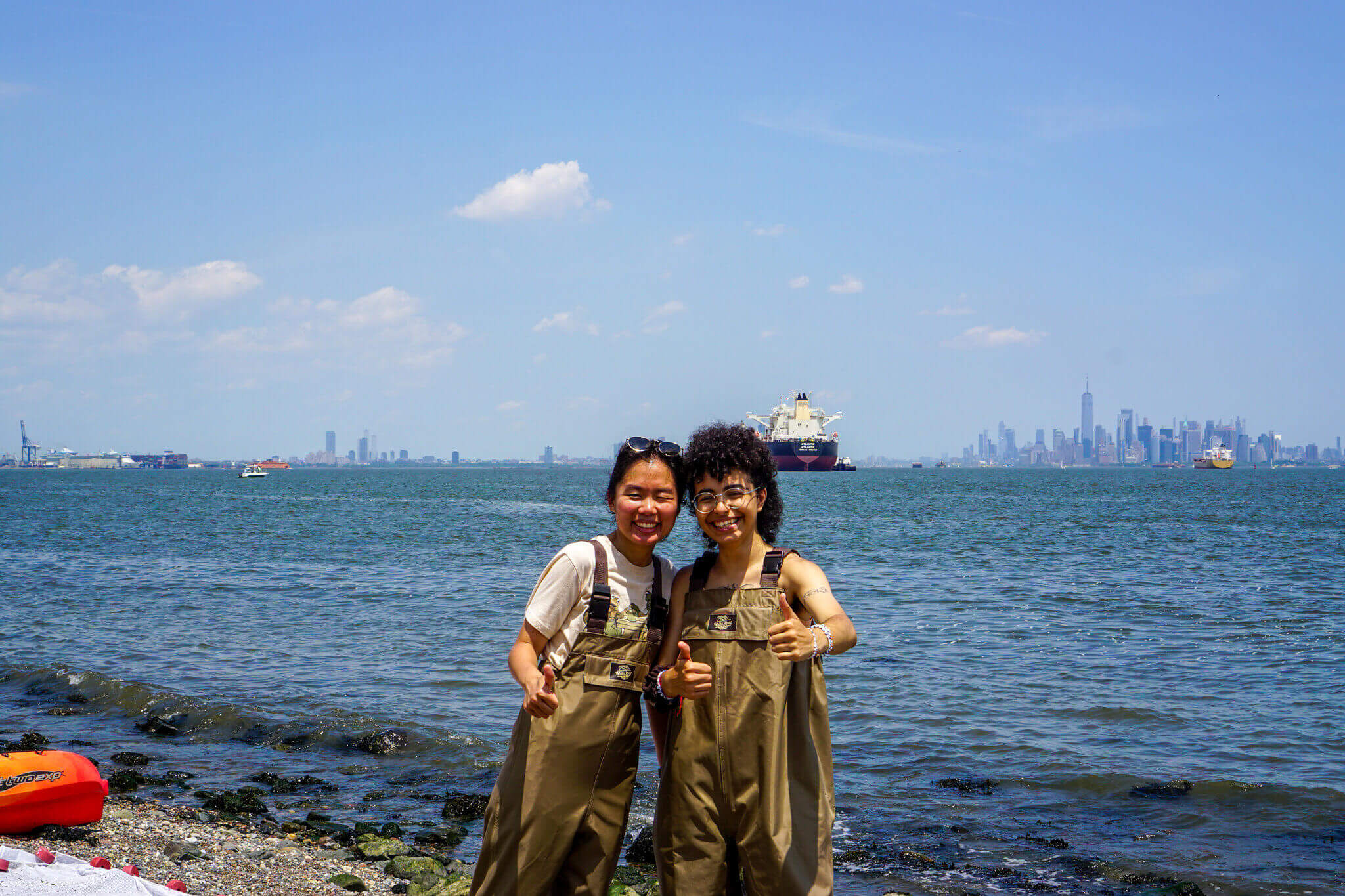
We live in a city of water, and as such it is not news to any New Yorker when we say our waterfronts are the frontlines of our changing climate. At the mention of coastal resilience in New York City, many people picture massive sea walls, high-tech tidal gates, or miles of poured concrete bulkheads. But there is a quiet paradox sitting right on our shoreline: the very materials we use to protect our coastal communities from rising tides are often sourced from a linear, carbon-heavy supply chain that accelerates climate change in the first place.
Every year, New York City generates more than 7 million tons of construction debris. Because our city has historically lacked the infrastructure to sort, store, and trade these resources, an astonishing 90% of this debris is hauled straight to out-of-state landfills. This is not just an ecological tragedy; it is a $50 million annual liability and a massive contributor to the construction sector’s status as the source of nearly a quarter of all solid waste in the United States.
For the Waterfront Alliance, whose WEDG® (Waterfront Edge Design Guidelines) set the gold standard for resilient coastal design, circular construction is the natural next frontier. True shoreline resilience does not exist in a vacuum; it requires us to rethink not just where we build, but how and what we build with.
As a professional land steward, I know the waterfront and its associated wetlands and marshes, to be a place of equilibrium, a negotiator. Life at the water’s edge is all about the changing of tides, the push and the pull of competing objectives, until there is a balance achieved. We know that the shoreline of the future can be built with this practice in mind, a balance of green and gray infrastructure that supports our shared aim of intelligent adaptation.

Credit: Our Temenos – Ecological Landscaping
Our Temenos is an ecological landscaping and green infrastructure company and certified MWBE with public and private experience building greenspaces across NYC and its shorelines since 2018. Our daily work involves circular green space design, native plant installations, tree care, and stormwater management across the five boroughs. We see firsthand how deeply connected the systems in our built environment are – an ecology unto itself. It was with that mindset and from our WEDG certified perspective that we launched The Circular Construction Hub (The HUB), a material reclamation ecosystem designed to turn New York’s construction waste liability into regional circular assets. We are taking our practice of repurposing, salvaging and upcycling materials in the landscape and expanding access for contractors, architects, agencies, and other landscapers to do the same, at scale!
When evaluating a waterfront project for WEDG certification, designers typically focus on operational resilience—how well a park absorbs a storm surge, or how a bioswale manages heavy rainfall. But there is a silent partner in the carbon equation: embodied carbon. This refers to the greenhouse gases emitted during the extraction, manufacturing, and long-distance transport of building materials – before they even arrive at the job site. Sourcing virgin or new materials carries an immense carbon penalty BUT circular construction directly neutralizes this by intercepting high-value materials before they ever reach a landfill and bringing them back to market.
When we put it all together, we get:
- Hyperlocal market stimulation: Deconstruction is logistics intensive, making it a powerful engine for local job creation. Nationally, the data is clear: every 1,000 tons of salvaged material diverted from the landfill generates up to 10 local green jobs, compared to just one job created by landfilling. To build this specialized workforce, we run a paid internship and training pipeline in partnership with Common Point and Henry Street Settlement, opening stable green career pathways for NYC youth.
- Storied & Unique Designs: Reclaimed materials possess a natural, weathered durability that makes them uniquely suited for harsh, saline waterfront environments. However, getting these materials into public spaces has historically been difficult due to strict structural building codes and fragmented supply chains.
- Resilience across the delivery: Consider an example – The Lincoln Tunnel is deconstructing its retaining walls. Now imagine those bricks from a local deconstruction job can be convened in one place and then resold and repurposed into permeable walkways, plazas and retaining walls. Thus, giving a piece of NY back to New Yorkers while creating truly resilient spaces and stimulating the local economy.

Credit: Our Temenos – Ecological Landscaping
Launching the Resource Revolution at the MADE Terminal
This season marks our transition from concept to active commercial operations. We have secured a one-year in-kind pilot lease through NYCEDC at the MADE Terminal in Brooklyn, giving us a centralized, accessible facility to receive, sort, and process materials.
The market appetite is already proven: before opening The HUB we had already salvaged over 145,000 pounds of materials in our early 2026 validation phase alone. We have already formalized relationships with premier regional general contractors to scale our operations. Our Year 1 target is to scale our capacity to divert 70,000 tons of solid waste, and to onboard 30+ active AEC client accounts — including small contractors and tradespeople who will benefit from access to discounted building materials.
By bridging the gap between municipal deconstruction and shoreline design, we are proving that the materials of New York’s past are the very resources we need to build our climate-resilient future. To get involved please email [email protected].