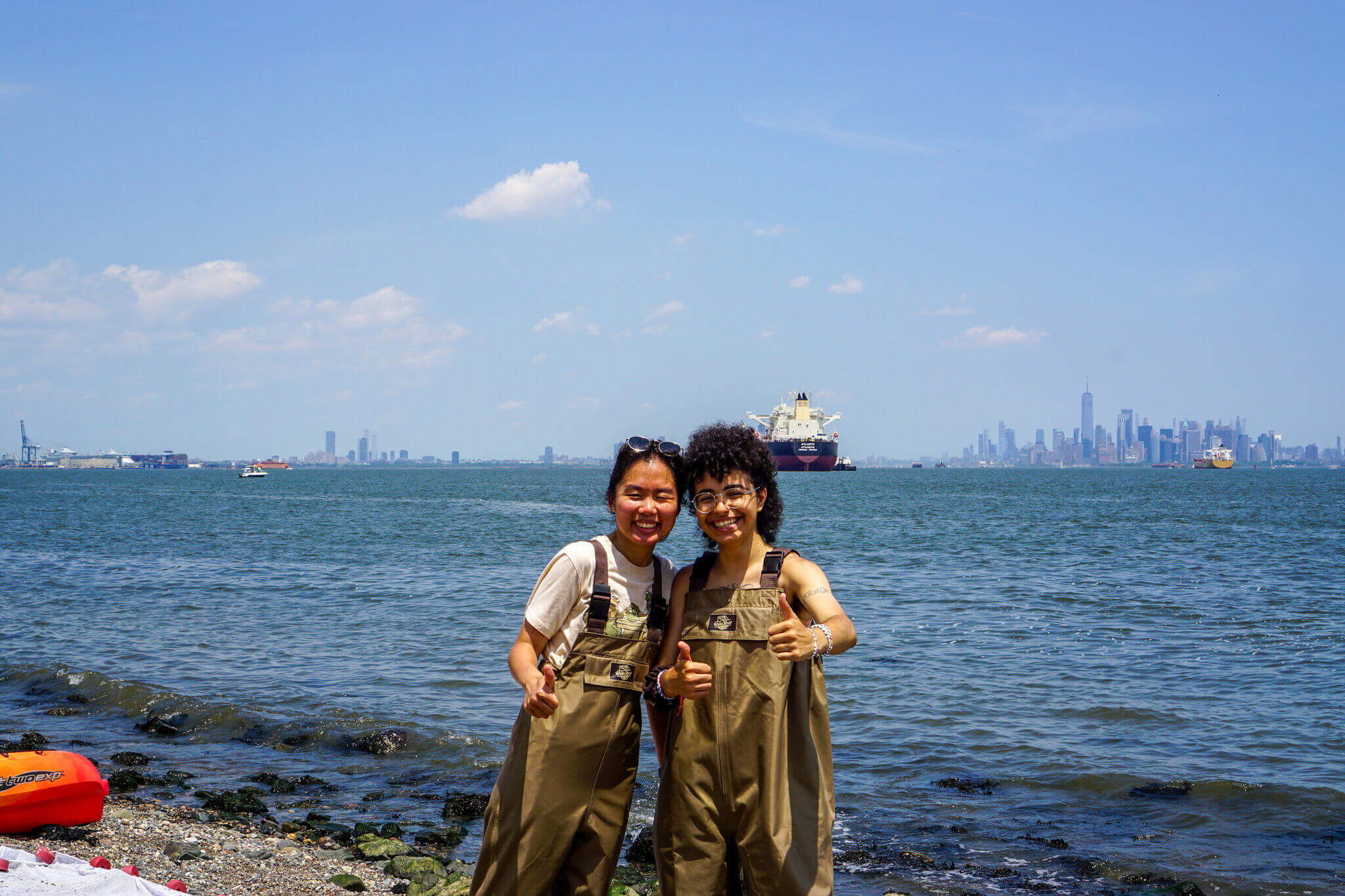
On the windy morning of an early October day, students from Curtis High school on Staten Island made the trek down to their local waterfront, an elevated walkway over a rip-rap shoreline in The Staten Island September 11th Memorial Park; 5 minutes from the St. George ferry terminal, and their school. This excursion wasn’t just a scenic walk; these students were becoming a part of something much larger than themselves or just this day. Thousands of other young people up and down the Hudson River, and its tributaries, were also gathering at their local waterfronts. A journey with a collective goal; to discover and document what lurks in our waters, how the river moves and functions, and why it is so important to know about the ecosystems that surround our homes.
This assembly of youths is no coincidence, October 6th 2026 was the 24th annual Day in the Life of the Hudson & Harbor event, a day dedicated to water.

Day in the life of the Hudson & Harbor is an annual event hosted by the Hudson River Estuary program in partnership with the Hudson River National Estuarine Research Reserve, and Lamont Doherty Earth Observatory; that has been taking place since 2003, and has evolved from an event that hosted 300 students to now having a reach over 5000. It is a day where students of all ages make their way to piers, beaches, marshes, seawalls, and anywhere you can access the water. Students then participate in a series of hands-on monitoring activities that allow them to discover firsthand all the ins and outs of the world of water that they may have been unaware of. These monitoring activities include water quality testing, sediment coring, fish identification, tracking tides, and more! All of this data collected throughout this day is then compiled, effectively creating a comprehensive snapshot of what a ‘day in the life of the Hudson & Harbor’ looks like; and after over two decades of collection, there is now an incredible and valuable history of our river that students of multiple generations have contributed to. An amazing resource for students and scientists alike to look back on to track, and study changes of the river throughout the decades.

Back on Staten Island, as students approached the water, they were greeted by Waterfront Alliance staff. Their eyes, a little skeptical, but full of curiosity and excitement as they scanned their surroundings; taking in the scenery and the collage of scientific tools, gadgets, buckets, and bags we had in tow. The questions start immediately: what are we doing here, what is this? – as they point this tool and that. In true teenage fashion, students were a bit off put by the windy weather at first, but it didn’t take long for most of their worries to fade away and be replaced by genuine fascination and intrigue.

We started out our Day In The Life monitoring with site observations. What is happening on the river? Where are the boats going? How is the water behaving? Orienting ourselves to the movement and activity around the harbor, students started to take notice of what it really means to live in a port city. We started guessing what these boats might be carrying or what their purpose was, and many were surprised to learn much of our products and goods arrived to us by boat. This paradigm shift highlights the disconnection that many people have with their local waterways. The dependence we have on the water surrounding us has been long forgotten and, now thought to be something just out of history books by much of the city’s residents. These observations are a curial first step to understanding the river.
You can’t understand what’s going on below the surface of the water if you don’t first understand what’s going on above.
This is the second year that Waterfront Alliance has hosted students from Curtis high school on their local waterfront for “Day In The Life”. This day is an incredibly important extension of our normal Estuary Explorers programming, and we are grateful to be able to participate through hosting Curtis HS. Not only does DITL encapsulate much of the same activities and objectives that we provide to our students across the city all year long, but it also expands on the importance of understanding that we are all connected by the water and how crucial it is to understand it; and take care of it as a collective population.

As students from Curtis Highschool continued their morning; they got hands on experience testing Ph, dissolved oxygen, turbidity, salinity and more. They also got a look at real life microorganisms under microscopes and learned how to identify common fish using a dichotomous key. With every new test and new fish learned, they became more connected to their waterways and their eyes opened to a world they didn’t realize surrounded them; walked past every day. On a bigger scale, their participation not only furthered their learning, but also contributed to a data set that helps understand the river. Which in turn helps us know how to protect it.

With just one day dedicated to water these students became stewards and scientists of the waterways and have left an impact for generations to come.